But where should I start?
Until recently common advice for growing the best vegetables was to dig the soil deep, load on fertilisers and, if necessary, use weed-killers and insecticides. Doing this often has increased crops around the world, but at the same time it frequently denuded soils. It also moved enormous amounts of carbon from the soil into the air as carbon dioxide.
Worldwide this had an enormous effect on the quality of our land and the amount of dangerous greenhouse gases in the atmosphere. Now growers who are worried by these trends are restoring their land and bringing the carbon back into their soil by growing regeneratively.
Change our growing methods

The first thing to do is to cut back on all digging. Every time that a spade or plough cuts the soil, it destroys massive numbers of soil organisms. It also leaves soil carbon open to oxidising away into the air as carbon dioxide. Soil that isn’t dug is more likely to keep these vital resources.
We can restore soil carbon by mulching and by composting. These processes add carbon directly to the soil and soil organisms take it down. If the world’s growers could double the amount of carbon in their soils, we would greatly reduce atmospheric carbon dioxide levels. In the process, soils would become more fertile and hold water more effectively.
Finding the carbon
We are surrounded by carbon. The structural parts of plants – leaves and stems for instance – contain large amounts. Each autumn we are deluged by carbon. Kept in sacks for a year or two, shredded by lawn mowers or forced through a sieve, these leaves can become a rich mulch for use on growing beds. Soil organisms, worms for example, then take large amounts of carbon into the soil and provide improved growing conditions. Mulches also smother weeds and help hold on to moisture.
Home made or bought-in composts also contain plenty of carbon
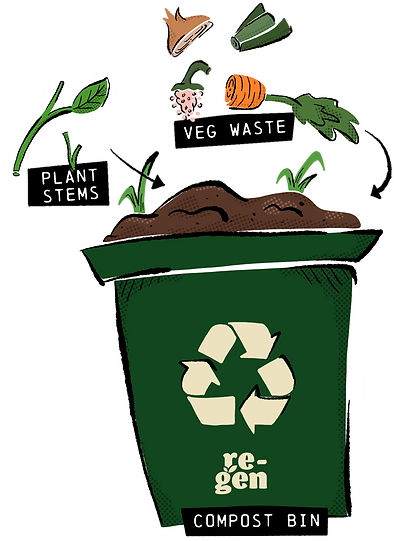
The very process of making compost – be it in bins or wormeries, usually requires a balance of carbon-rich and nutrient-rich compost materials. Leafy materials such as grass cuttings and vegetable waste usually contain lots of nitrogen. Plant stalks and stems can balance this with more carbon. A good compost returns these valuable growing materials to the soil. And of course burning your waste materials puts all this carbon into the atmosphere as carbon dioxide. It can also be a health risk to some of your neighbours.
Holding on to carbon, nutrients, air and water
Experienced growers will recognise healthy soils. They tend to be darker, have a crumb structure and smell good. They will often hold together when squeezed in the hand without sticking into a lump. The crumb structure helps the soil hold on to water and minerals. It also allows vital air to reach plant roots and soil life. Rains can wash nutrients away from even the best soils. Long periods of sunshine can dry out and sterilise soil surfaces covered by helpful plants as much as possible.
These cover crops can:
- Draw up nutrients from deep in the soil
- Smother smaller weeds
- Fix nitrogen
- Stop soil surfaces from drying out
- Increase soil carbon
- Help maintain biodiversity above and below ground and feed us
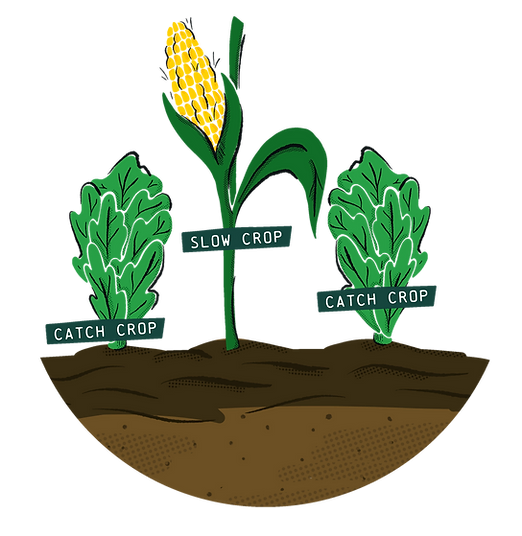
For example quick growing crops like radishes or lettuces can be grown between slower crops such as sweetcorn.
Nitrogen-fixing crops such as clovers and trefoils can capture nitrogen and provide food for pollinators. Deep rooted perennials such as asparagus and artichokes can be left in the ground for many years, leaving the soil undisturbed and drawing up deep nutrients. We can then capture these nutrients by composting the old leaves and stems.